

Debt isn’t just a math problem; it’s a momentum problem. When you are staring at a mountain of bills, the hardest part is often just knowing where to start.
The secret to paying off debt isn’t always finding more money—it is about organizing the money you have. To help you do that, we have released a comprehensive bundle of 10 Free Debt Payoff Planners.
These printable PDF templates are designed to take the chaos out of your finances and replace it with a clear, step-by-step battle plan.
Whether you are a visual learner, a detail-oriented planner, or a “big picture” thinker, there is a template here designed for your brain.
The Psychology of Paper: Why Printables Work
In a digital world, why use a printable PDF?
Because debt is abstract. When you swipe a card, you don’t feel the money leaving. Conversely, when you physically write down a payment and lower your balance on paper, your brain registers the “win.”
These 10 templates are designed to leverage that psychology, helping you track confirmation numbers, visualize interest rates, and physically check off milestones.
The 10-Template Breakdown: Find Your Perfect Match
We have analyzed the 10 designs included in this free bundle. Here is how to choose the right one for your specific financial situation.
1. The “Deep Dive” Auditor
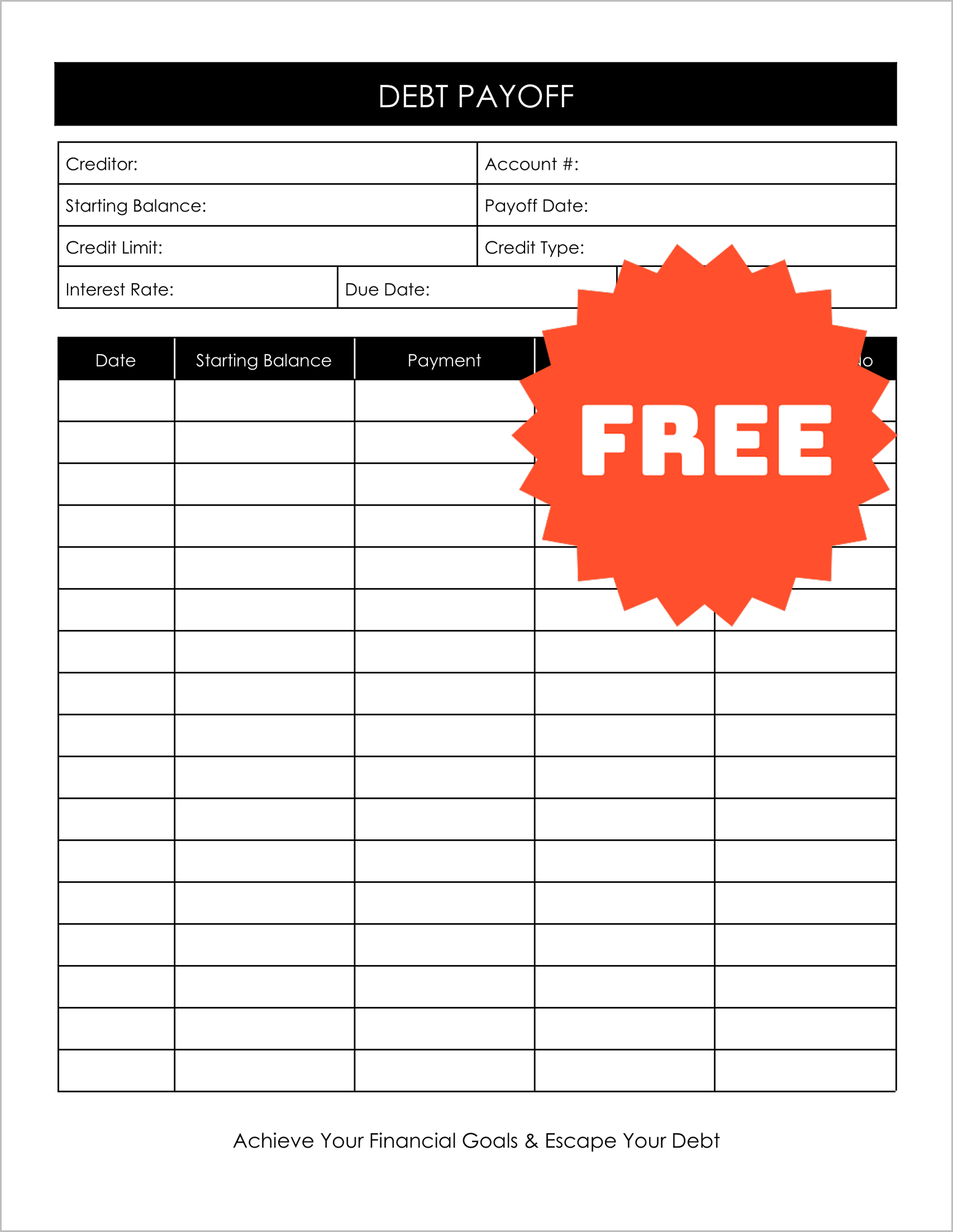
Perfect for: The first day of your debt-free journey.
Before you pay a cent, you need to know exactly what you owe. This template acts as a comprehensive cover sheet. It forces you to log the Creditor, Account #, Starting Balance, and critical details like the Interest Rate and Credit Limit.
It effectively serves as a “financial snapshot” of a single debt before you attack it.
2. The Verification Log
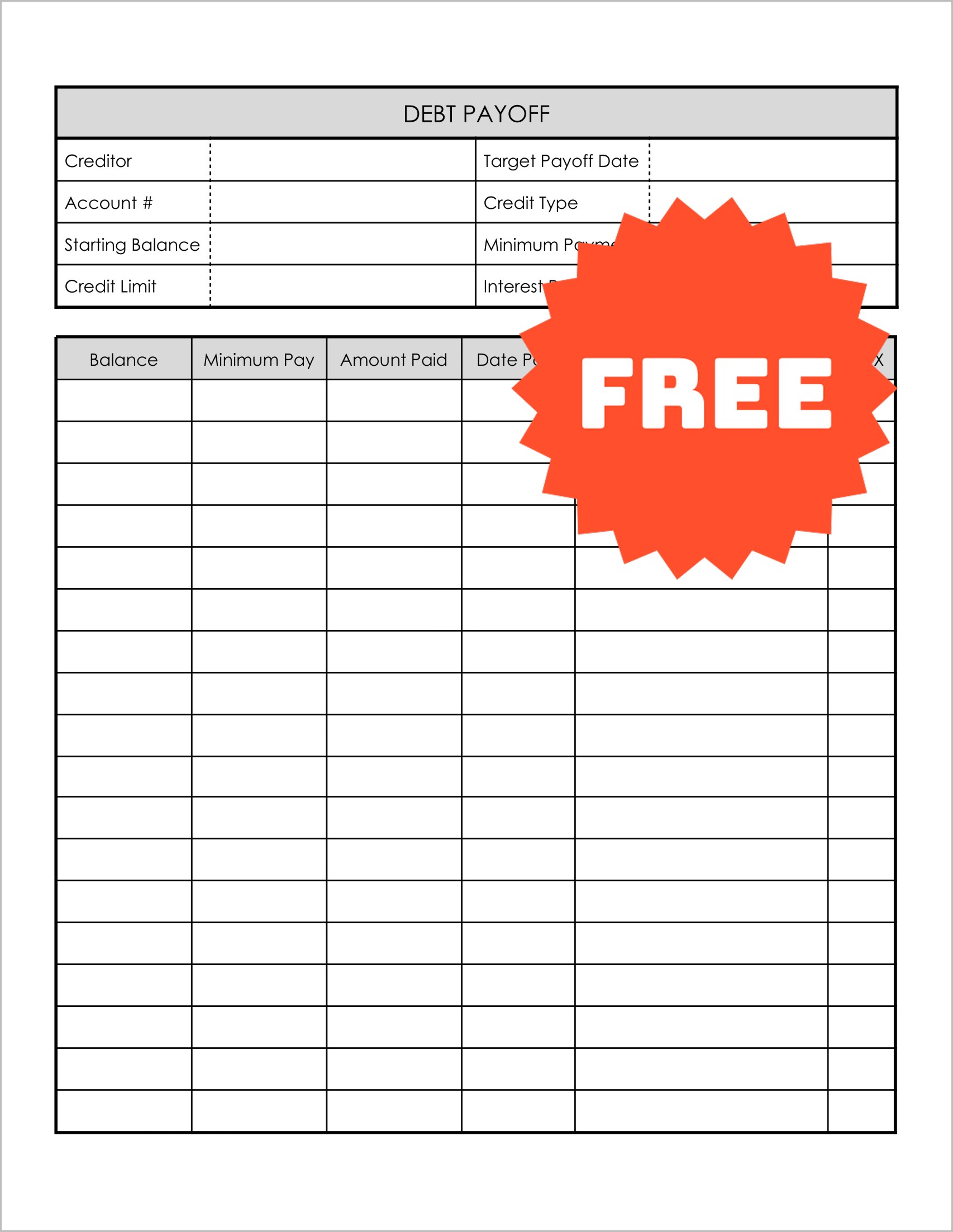
Perfect for: People who don’t trust the bank.
Have you ever made a payment and worried it didn’t go through? This template is designed for security. It includes a standard ledger for dates and balances but adds a crucial column for the Confirmation No.
This creates a paper trail that protects you if a creditor ever disputes a payment.
3. The Relationship Manager
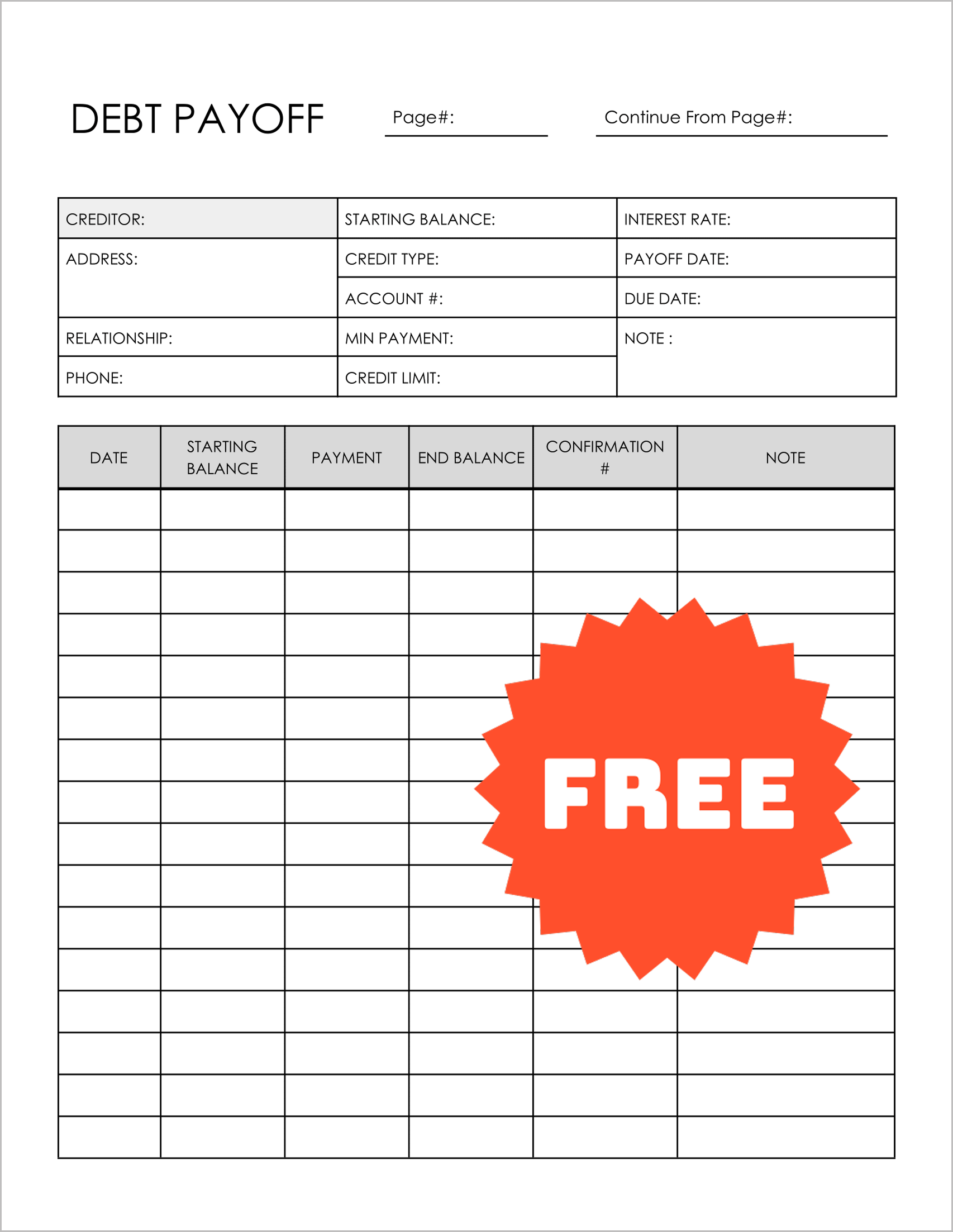
Perfect for: Medical debt or personal loans.
Not all debt is a credit card. Some debts involve personal relationships or complex billing departments. This unique tracker includes fields for Address, Phone, and even a Relationship contact field.
It allows you to keep contact details right next to your payment history so you always know who to call.
4. The “Thermometer” Visualizer

Perfect for: The fridge or vision board.
This is the ultimate motivation tool. It features a “Visual Payoff Progress” chart that resembles a thermometer, marked in 5% increments from 100% down to 0%.
As you pay off the principal, you color in the sections (e.g., 95%, 90%, 85%). Watching the bar shrink provides the dopamine hit you need to keep going.
5. The Minimalist Ledger
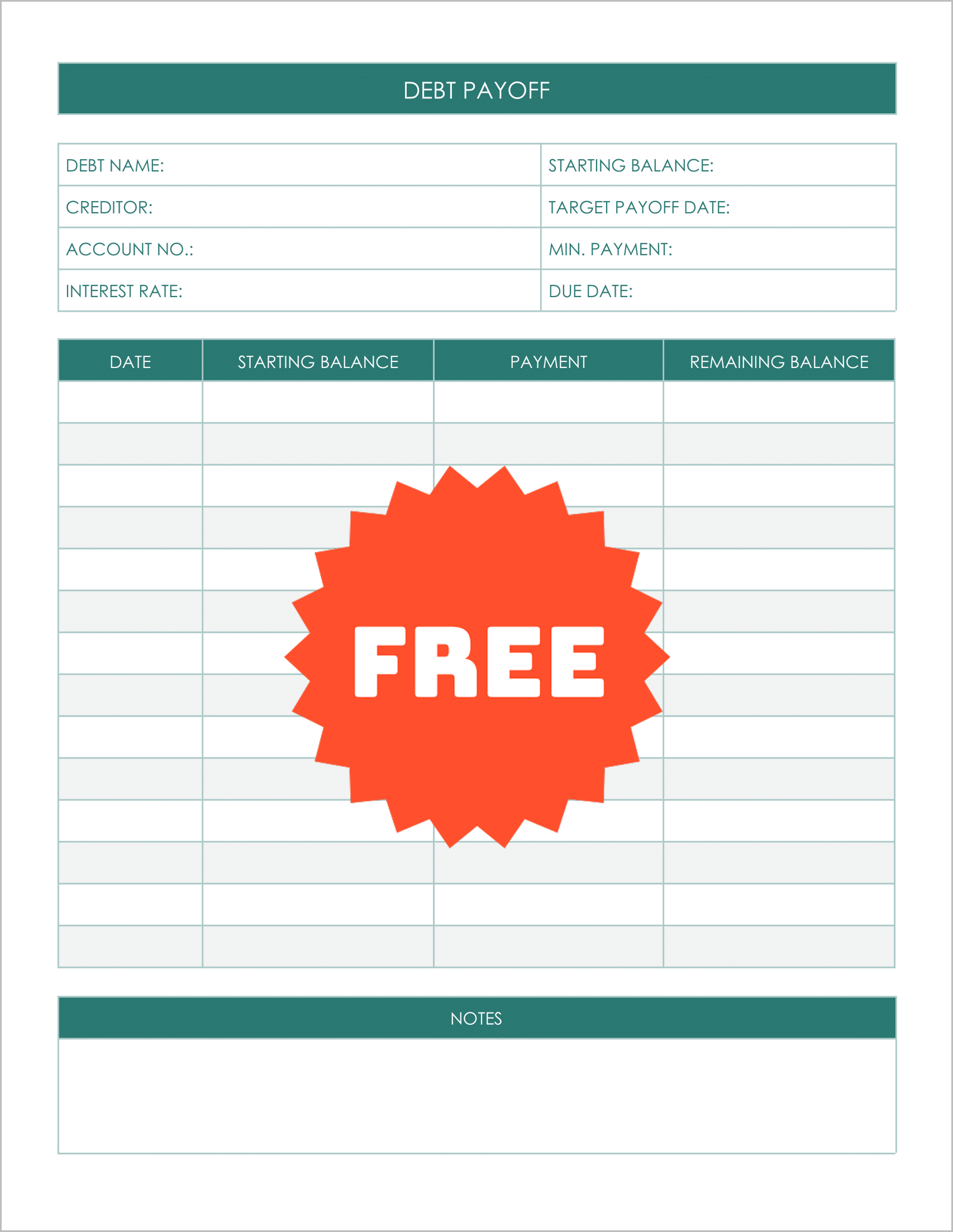
Perfect for: Distraction-free tracking.
If you find complex forms overwhelming, use this template. It strips away the noise, leaving simple fields for Debt Name, Target Payoff Date, and a clean table to track the Starting Balance vs. Remaining Balance. It’s clean, simple, and effective.
6. The Utilization Tracker
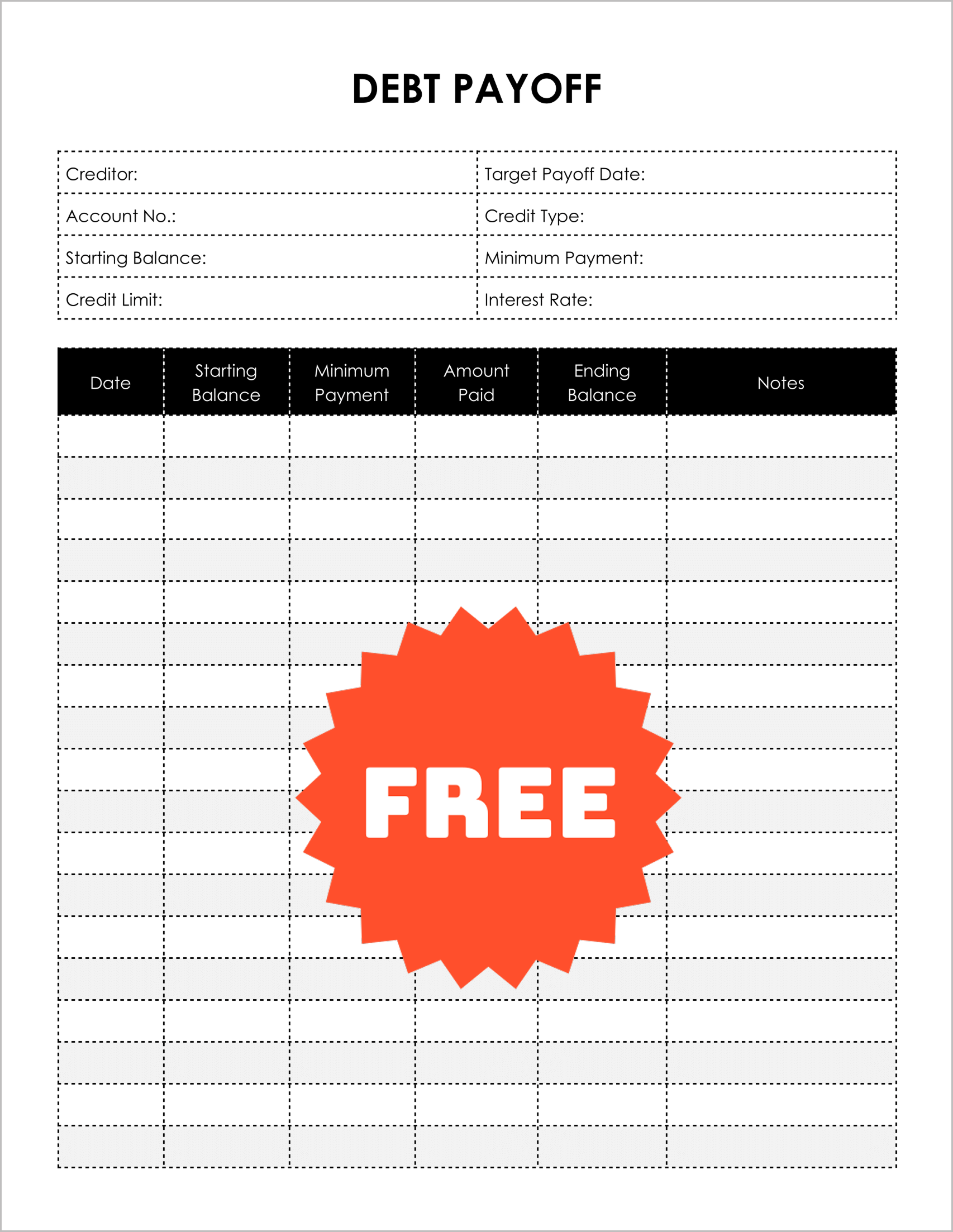
Perfect for: Improving your credit score.
This template highlights the Credit Limit and Credit Type at the top of the page. By tracking your balance in relation to your limit, you can strategically lower your “credit utilization ratio”—a key factor in boosting your credit score while you pay down debt.
7. The “Year-at-a-Glance” Calendar
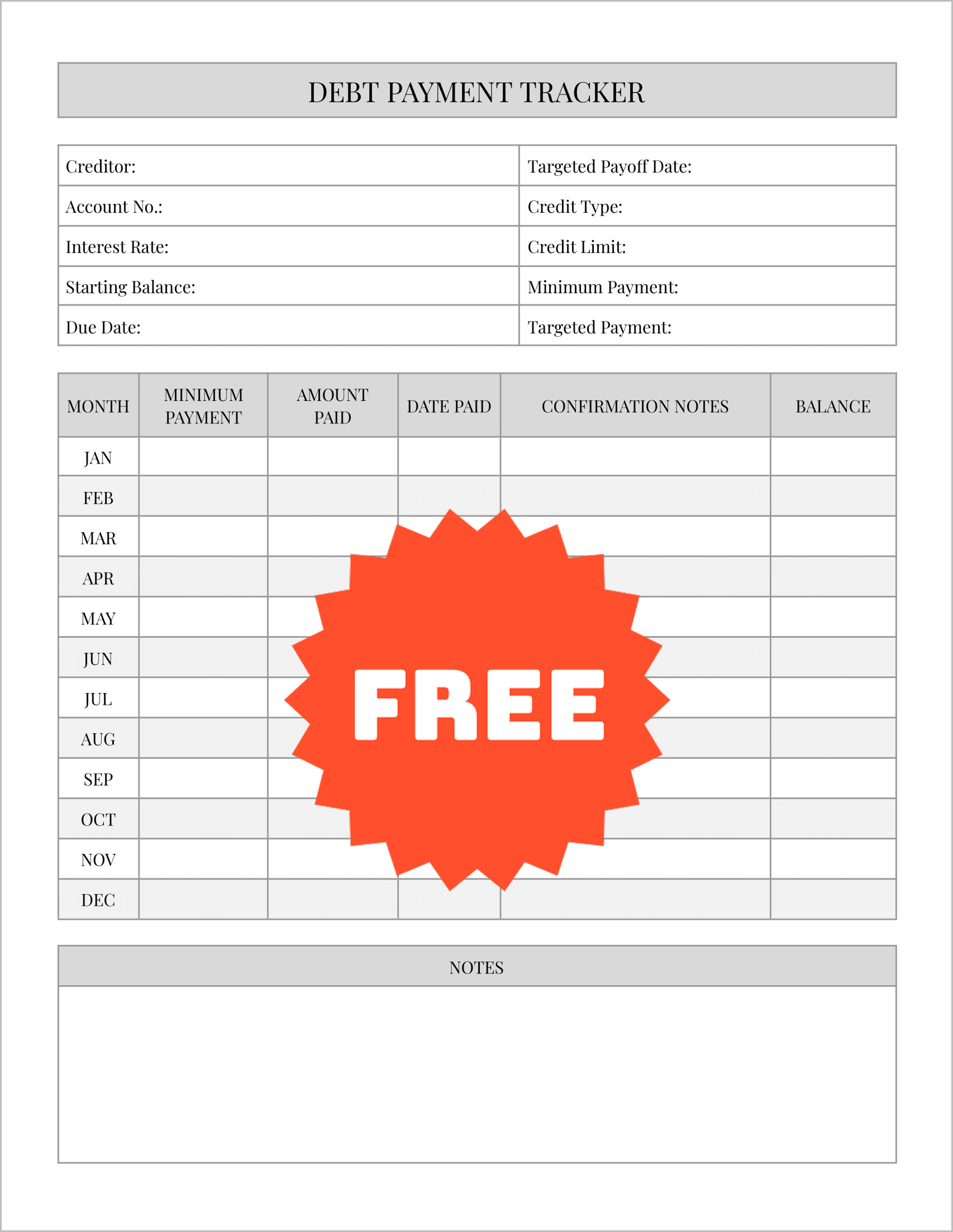
Perfect for: Budgeting annual cash flow.
This Debt Payment Tracker takes a seasonal approach. The table is pre-populated with rows for every month, from JAN to DEC.
This is ideal for spotting trends (like how your payments might dip during the holidays) and ensuring you never miss a recurring monthly due date.
8. The “Snowball” Strategist
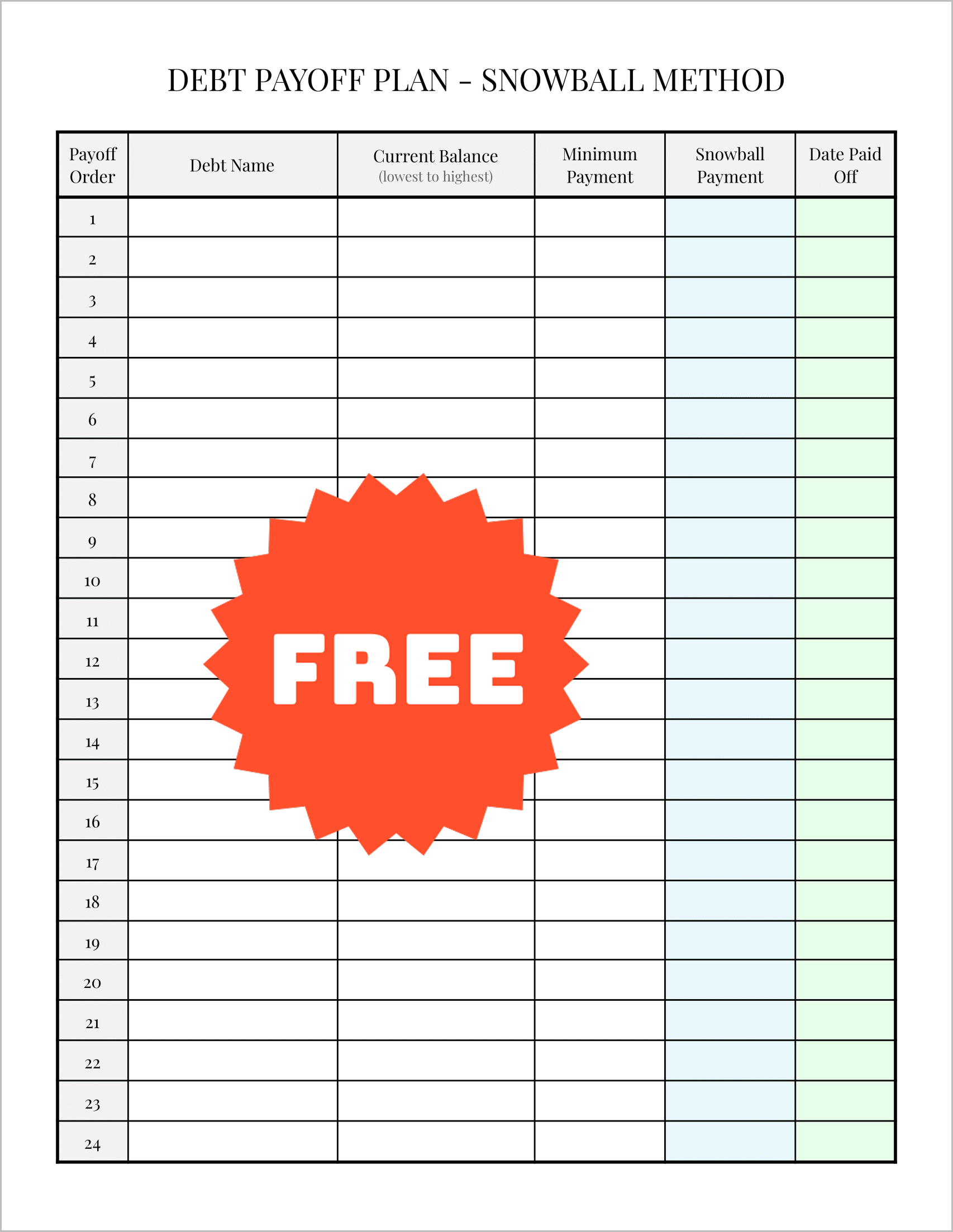
Perfect for: The Dave Ramsey method.
Most trackers focus on one debt at a time. This master list allows you to track up to 24 different debts on a single page.
You list them in Payoff Order (lowest balance to highest) and track the specific Snowball Payment—the extra cash you roll over from one debt to the next.
9. The Interest Rate Hawk
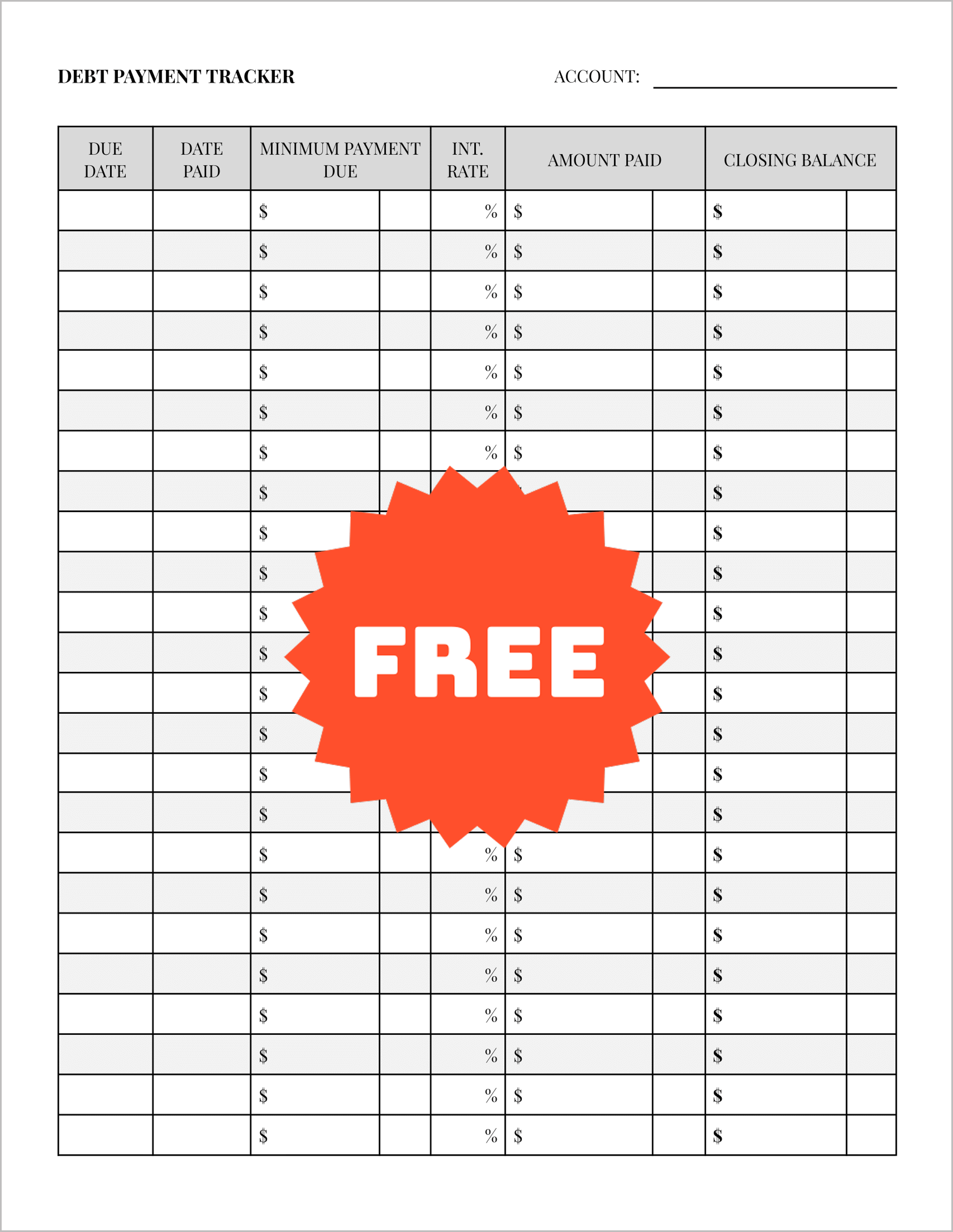
Perfect for: The Avalanche method.
If you hate wasting money on interest, this is your tool. The ledger includes a recurring column for Int. Rate % on every single line item.
This constant reminder of the interest rate motivates you to pay the debt off faster to stop the bleeding.
10. The “Status Update” Checklist
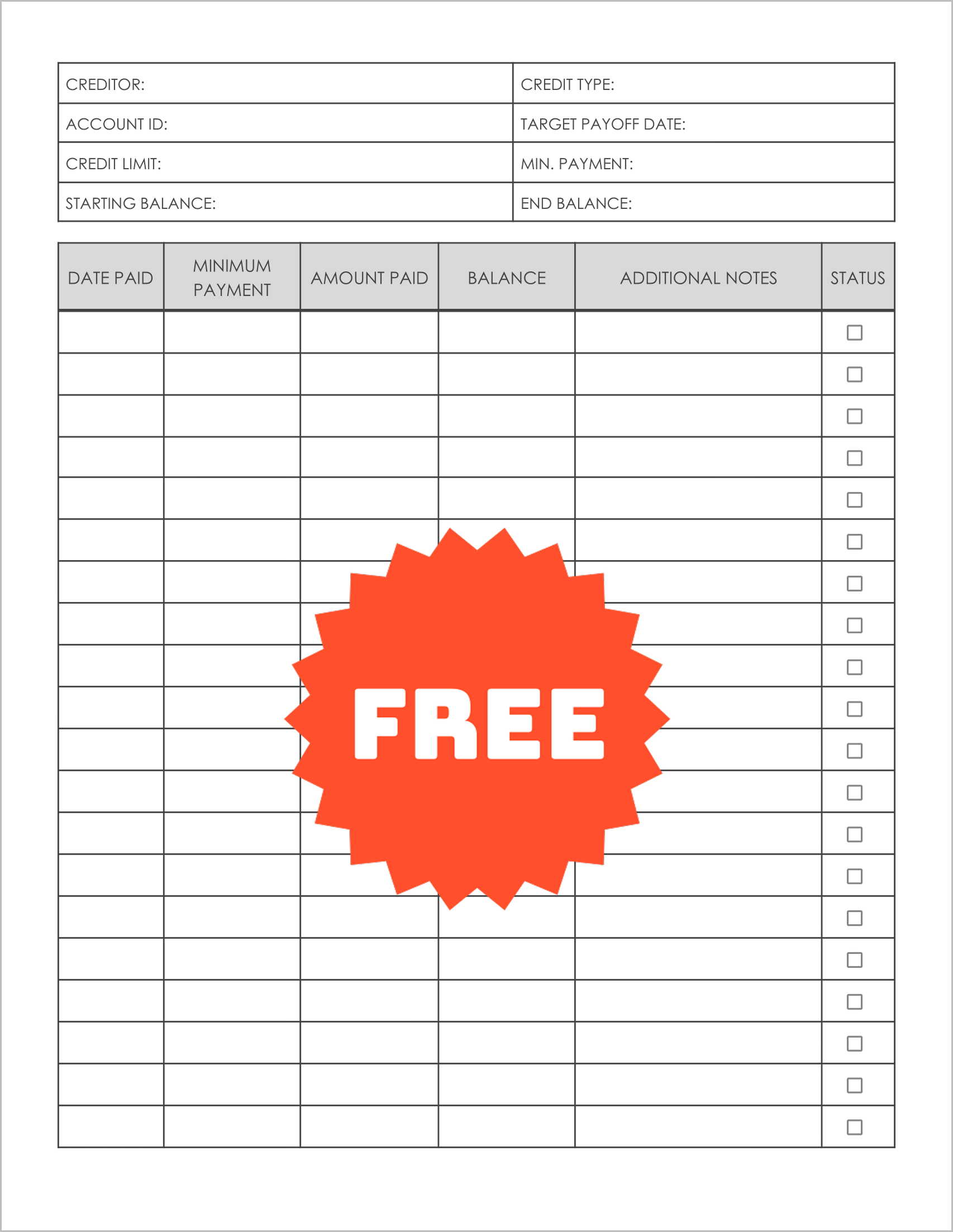
Perfect for: Task-oriented people.
This template turns payments into a to-do list.
It features a Status column with empty checkboxes. It also provides a large Additional Notes section, giving you space to journal about your progress or note any changes in terms.
Strategy Corner: How to Start
Phase 1: The Inventory
Print Template #8 (The Snowball Method). Go through your bank statements and list every single debt, from your smallest medical bill to your student loans. Don’t leave anything out.
Phase 2: The Setup
For your primary focus debt (the one you want to kill first), print Template #4 (The Visualizer). Calculate 5% of the total balance—that is your milestone number. Every time you pay off that amount, color in a block.
Phase 3: The Routine
Keep these printables in a “Financial Freedom Binder.” Every time you get paid, sit down, write the check (or click pay), and immediately log the Confirmation Notes and Date Paid on your physical sheet.
Frequently Asked Questions
Template #6 and Template #9 are best for credit cards because they explicitly track Credit Limits and Interest Rates, which are the two most critical factors in revolving credit.
Yes. While Template #3 includes a Relationship field, it is also excellent for bank loans where you might have a specific loan officer or case manager you need to contact regularly.
The Snowball Payment refers to the accelerated payment strategy where you take the minimum payment from a debt you just finished and apply it to the next debt on the list. This “snowballs” your payments into larger amounts over time.